Thursday, June 29, 2017

1/144 de Havilland Vampire FB.5/FB.52 - Mark I


1/144 de Havilland Vampire FB.5/FB.52 - Mark I

de Havilland Vampire FB.5/FB.52 'Commonwealth Service' (2in1 = 2 kits in 1 box)
(RAF, RAuxAF, RCAF, SAAF)

The de Havilland Vampire was a British jet fighter developed during WWII. It was the second jet, after the Gloster Meteor, operated by the RAF. The Vampire Mk.5, which flew in June 1948, was a fighter-bomber modified from a Vampire F.3 fighter.

It was a single-seat monoplane aircraft, of a combined wood-and-metal construction, powered by a DH Goblin turbojet. It featured twin-boom tail configuration with two wing-root intakes, bubble canopy and was fitted with a non-ejection seat. Two external tanks or 500lb bombs could be carried under the wing, while eight 3" RPs could be attached inboard of the booms.

The Vampire replaced wartime piston-engine fighters and was in front-line service until 1953. The Vampire FB.5 equipped many RAF squadrons in Europe, the Middle East and the Far East, and was supplied to other Commonwealth air force units.

Almost 3,300 Vampires of all marks were manufactured (of which 930 were FB.5s for the RAF and another 88 for export), a quarter of them built under licence in other countries. It was also sold to many nations and operated in a wide range of environments around the world.

Colour schemes included in the kit:
1) de Havilland DH.100 Vampire FB Mk.5, VV217, de Havilland Aircraft Company trials a/c, Hatfield airfield, 1949

2) de Havilland DH.100 Vampire FB Mk.5, VZ267, Black L, No.613 (City of Manchester) Sq., Royal Auxiliary Air Force, Ringway airfield, 1951-57

3) de Havilland DH.100 Vampire FB Mk.5, VZ339, No.421 Sq., Royal Canadian Air Force, Odiham airfield, U.K., spring 1951

4) de Havilland DH.100 Vampire FB Mk.52, Black 238, Advanced Flying School, South African Air Force, Air Force Base Pietersburg, South Africa, 1968

Two injection-moulded kits are supplied in this box and each kit contains 31 parts and three clear parts (the cockpit canopy and position lights). A comprehensive decal sheet is included.

Source: https://www.hannants.co.uk/product/MKM14468

Additional Reading:
https://en.wikipedia.org/wiki/De_Havilland_Vampire

http://www.airvectors.net/avvamp.html


1/144 de Havilland Vampire FB.5/FB.51/FB.52A/Mk.6 - Mark I


1/144 de Havilland Vampire FB.5/FB.51/FB.52A/Mk.6 - Mark I 

de Havilland Vampire FB.5/FB.51/FB.52A/Mk.6 'In Europe & North Africa' (2in1 = 2 kits in 1 box)
(RAF, French Navy, Italian AF, Swiss AF)

The de Havilland Vampire was a British jet fighter developed during WWII. It was the second jet, after the Gloster Meteor, operated by the RAF. The Vampire Mk.5, which flew in June 1948, was a fighter-bomber modified from a Vampire F.3 fighter.

It was a single-seat monoplane aircraft, of a combined wood-and-metal construction, powered by a DH Goblin turbojet. It featured twin-boom tail configuration with two wing-root intakes, bubble canopy and was fitted with a non-ejection seat. Two external tanks or 500lb bombs could be carried under the wing, while eight 3" RPs could be attached inboard of the booms.

The Vampire replaced wartime piston-engine fighters and was in front-line service until 1953. The Vampire FB.5 equipped many RAF units in Europe, the Middle East and the Far East, while, by far, the largest number of Vampires were stationed in Germany.

Almost 3,300 Vampires of all marks were manufactured, a quarter of them built under licence in other countries, including France, Italy and Switzerland. It was also sold to many nations and operated in a wide range of environments around the world.

Colour schemes included in the kit:
1) de Havilland DH.100 Vampire FB Mk.5, WA144, Black A-U, No.112 Sq., RAF, Brüggen Air Base, Germany, autumn 1953

2) SNCASE (de Havilland DH.100) Vampire FB Mk.51, No.10080, White 57.S.15, Escadrille 57S (École de Chasse a Réaction), French Navy (Aéronautique navale), Khouribga Naval Base, Morocco, mid-1950s

3) de Havilland DH.100 Vampire FB Mk.52A, MM6024, Black S-3 171, 6th Sq. (Gruppo), 4th Fighter Wing (Stormo Caccia), Italian Air Force (Aeronautica Militare), Napoli-Capodichino Air Base, during 'Exercise Cirrus', Wiesbaden Air Base, Germany, August 1951

4) Federal Aircraft Works F+W (de Havilland DH.100) Vampire Mk.6, Black J-1107, Swiss Air Force (Schweizer Luftwaffe), Emmen Air Base, the 1950s Federal Aircraft Works F+W (de Havilland DH.100) Vampire Mk.6, Black J-1107, (experimental camouflage scheme for "Target Actor" a/c), Zielfliegerkorps 5 (Aerial Target Corps), Swiss Air Force, Samedan Airport, 1977

Two injection-moulded kits are supplied in this box and each kit contains 31 parts and three clear parts (the cockpit canopy and position lights). A comprehensive decal sheet is included.

https://www.hannants.co.uk/product/MKM14469

Additional Reading:
https://en.wikipedia.org/wiki/De_Havilland_Vampire

http://www.airvectors.net/avvamp.html

1/144 de Havilland Vampire FB.5/FB.52/J 28B - Mark I


1/144 de Havilland Vampire FB.5/FB.52/J 28B - Mark I 

de Havilland Vampire FB.5/FB.52/J 28B 'In the North' (2in1 = 2 kits in 1 box)
(RAuxAF, Swedish AF, Finnish AF, Norwegian AF)

The de Havilland Vampire was a British jet fighter developed during WWII. It was the second jet, after the Gloster Meteor, operated by the RAF. The Vampire Mk.5, which flew in June 1948, was a fighter-bomber modified from a Vampire F.3 fighter.

It was a single-seat monoplane aircraft, of a combined wood-and-metal construction, powered by a DH Goblin turbojet. It featured twin-boom tail configuration with two wing-root intakes, bubble canopy and was fitted with a non-ejection seat. Two external tanks or 500lb bombs could be carried under the wing, while eight 3" RPs could be attached inboard of the booms.

The Vampire replaced wartime piston-engine fighters and was in front-line service until 1953. The Vampire FB.5 equipped many RAF units in Europe, the Middle East and the Far East.

Almost 3,300 Vampires of all marks were manufactured, a quarter of them built under licence in other countries. It was also sold to many nations and operated in a wide range of environments around the world.

Colour schemes included in the kit:
1) de Havilland DH.100 Vampire FB Mk.5, WG833, No.603 (City of Edinburgh) Sq., Royal Auxiliary Air Force, Turnhouse airfield, 1954-57

2) DH 100 Vampire J 28B (FB Mk.50), 28317, 18-Red A, Flygflottilj 18 (Wing F 18), Royal Swedish Air Force (Flygvapnet), Tullinge Air Base, spring 1953

3) de Havilland DH.100 Vampire FB Mk.52, VA-3, Black 3, HavLv 11 (Fighter Sq.), Finnish Air Force (Ilmavoimat), Pori airfield, 1953

4) de Havilland DH.100 Vampire FB Mk.52, V0126, Black ZK-X, 337 skvadron (Sq.), Royal Norwegian Air Force (Luftforsvaret), V�rnes Air Station, 1953

Two injection-moulded kits are supplied in this box and each kit contains 31 parts and three clear parts (the cockpit canopy and position lights). A comprehensive decal sheet is included.

https://www.hannants.co.uk/product/MKM14470

Additional Reading:
https://en.wikipedia.org/wiki/De_Havilland_Vampire

http://www.airvectors.net/avvamp.html

1/144 Heinkel He-162A-2 captured Russian aircraft - by Brengun


1/144 Heinkel He-162A-2 captured Russian aircraft - by Brengun

I assume this is the recently released He-162A Brengun kit, with alternative decals.

https://www.hannants.co.uk/product/BRP144006

1/44 Bachem Natter RAMP/TRAILER (designed to be used with Brengun kits)


1/44 Bachem Natter RAMP/TRAILER (designed to be used with Brengun kits)

Resin kit, aircraft not supplied.

http://www.brengun.cz/e-shop/1-144-construction-kits-18/bachem-natter-ramp-trailer-1340

other Natter related posts: https://kampfgruppe144.blogspot.co.uk/search/label/Natter

1/144 German Opel Kapitän staff car- hardtop (2 in set) - Brengun


1/144 German Opel Kapitän staff car- hardtop (2 in set) - Brengun

Resin kit of german staff car, includes photo etched parts.

https://en.wikipedia.org/wiki/Opel_Kapit%C3%A4n


http://www.brengun.cz/e-shop/1-144-construction-kits-18/german-staff-car-hardtop-(2-in-set)-1342#!prettyPhoto

1/144 U.S. Willys Jeep (2 in set) - Brengun


1/144 U.S. Willys Jeep (2 in set) - Brengun

Resin with photo-etch parts

http://www.brengun.cz/e-shop/1-144-construction-kits-18/u-s-jeep-(2-in-set)-1341

Monday, May 29, 2017

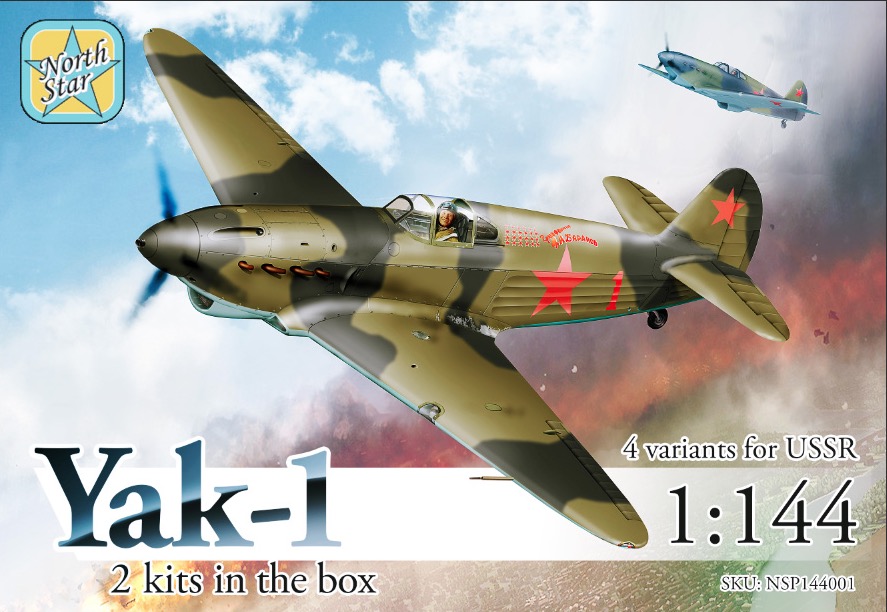
1/144 Yak-1 (2 kits in 1) from Northstar


1/144 Yak-1 (2 kits in 1) from Northstar
At this stage, I am not sure what decals etc will be available, but the box indicates 4 schemes. (to be confirmed)

The Yakovlev Yak-1 (Russian: Яковлев Як-1) was a World War II Soviet fighter aircraft. Production began in early 1940. It was a single-seat monoplane with a composite structure and wooden wings.

The Yak-1 was manoeuvrable, fast and well armed, and it was easy to maintain and reliable. It formed an excellent basis for subsequent developments from the Yakovlev bureau. It was the founder of a family of aircraft, with some 37,000 being built (Soviet naming conventions obscure the fact that the Yak-1 and its successors — the Yak-7, Yak-9 and Yak-3 — are essentially the same design)

https://en.wikipedia.org/wiki/Yakovlev_Yak-1

Expected release date : "soon" June-July 2017

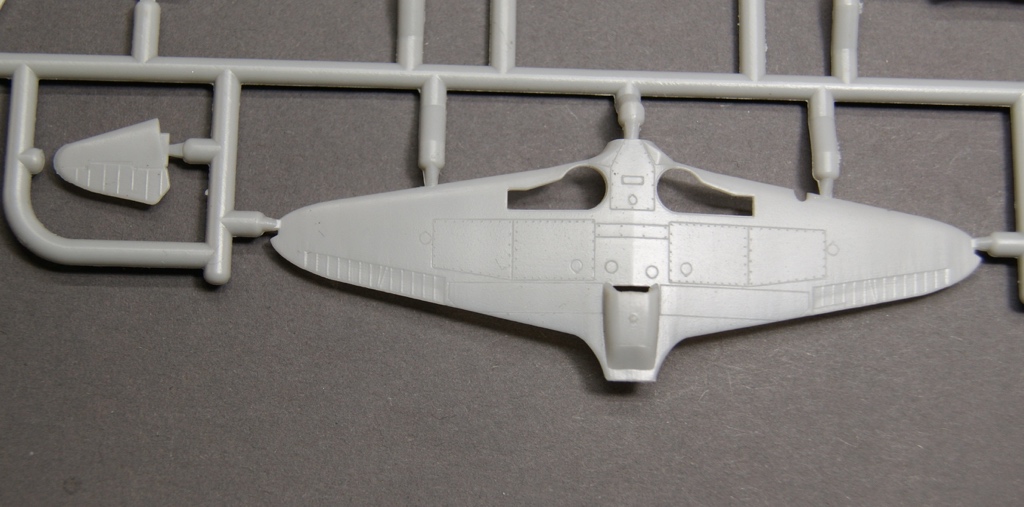
More sprue Shots from Nothstar
https://northstarmodels.com/2017/05/northstarmodels-1144-yak-1-test-sprues/


1/144 He-162D Volksjeager - Brengun


1/144 He-162D Volksjeager - Brengun
Injected plastic (1x Kit) plus decals

The Heinkel He 162 Volksjäger (German, "People's Fighter"), the name of a project of the Emergency Fighter Program design competition, was a German single-engine, jet-powered fighter aircraft fielded by the Luftwaffe in World War II. Designed and built quickly, and made primarily of wood as metals were in very short supply and prioritised for other aircraft, the He 162 was nevertheless the fastest of the first generation of Axis and Allied jets. Volksjäger was the Reich Air Ministry's official name for the government design program competition won by the He 162 design. Other names given to the plane include Salamander, which was the codename of its construction program, and Spatz ("Sparrow"), which was the name given to the plane by Heinkel.

He 162D — proposed upgrade with a configuration similar to C-series but a dihedral forward-swept wing.

https://en.wikipedia.org/wiki/Heinkel_He_162

http://www.hauler.cz/e-shop/1-144-plastic-kits-32/he-162d-volksjeager-1338
I would think that the H-162A Photo-etch kit would also fit this item
http://www.hauler.cz/e-shop/1-144-accessories-19/heinkel-he-162a-(brengun-kit)-1295

https://kampfgruppe144.blogspot.co.uk/2017/02/1144-future-releases-by-brengun-spotted.html
https://kampfgruppe144.blogspot.co.uk/2016/11/1144-heinkel-he-162a-salamander-spatz.html
https://kampfgruppe144.blogspot.co.uk/2017/01/1144-me-163b-komet-two-kits-in-box.html

1/144 Bristol Freighter MK21 - Oz Mods


1/144 Bristol Freighter MK21 - Oz Mods

A repackaged version of the OZ mode kits, with resin part to enable the construction of a MK 21 Bristol Freighter.

http://www.ozmods-kits.com/aircraft-kits-1144

The resin parts should include a new tail and engines

Include decal schemes for 1x RAF, 4x RAAF and a Civilian Silver City scheme.

The Freighter was developed during the Second World War, having attracted official attention from the British Air Ministry, which sought the development of a rugged vehicle capable of carrying various cargoes, including a 3-ton truck.
The Bristol Type 170 was designed as a stop-gap project to provide work for the Bristol Aeroplane Company while the Bristol Brabazon was under development. Subsequently, the British Air Ministry expressed interest in the project, believing that it would provide a rugged transport aircraft capable of using unimproved airstrips; accordingly, a pair of prototypes were ordered on the condition that the design was modified so that it would be compatible with the air-transporting of a British Army 3-ton truck.
In the military export market, the type was used by a number of Air Forces, including those of Argentina, Australia, Burma, Canada, New Zealand, and Pakistan.

See also the Oz Mods Bristol Freighter MK31
https://kampfgruppe144.blogspot.co.uk/2016/12/1144-bristol-freighter-mk-31-ozmods.html

Saturday, May 20, 2017

1/144 Embraer KC-390 by MASTER-X


1/144 Embraer KC-390 by MASTER-X

Master-X is to release a resin 1/44 scale Embraer KC-390. This will be their first 1/144 kit.

The Embraer KC-390 is a medium-size, twin-engine jet-powered military transport aircraft under development by Brazilian aerospace manufacturer Embraer, able to perform aerial refuelling and to transport cargo and troops. It is the heaviest aircraft that the company has made to date, and will be able to transport up to 26 t (29 tons) of cargo, including wheeled armoured fighting vehicles.
Wikipedia

https://en.wikipedia.org/wiki/Embraer_KC-390

http://master-x.wz.cz/index.html

Source: http://www.aeroscale.co.uk/


Sunday, May 14, 2017

1/144 Vickers VC-10 K4 Type 1170 tanker - Roden


1/144 Vickers VC-10 K4 Type 1170 tanker - Roden  Vickers 

The Vickers VC10 Airliner was designed in the late 1950's and its first flight was on the 29th June 1962.The aircraft was designed for long haul and transatlantic flights and was capable of Hot & High operations on the African routes It held several sub-sonic speed records on the Transatlantic routes only beaten by Concord. The VC10 was held in very high regard by both Crew and the passengers who flew on it.

The other airframes gained a perhaps less glamorous, but nevertheless a very important role - the Royal Air Force's Avro Vulcan strategic bombers needed air refueling when conducting long distance missions, and the VC10 was very suitable for this role, especially considering its high speed and impressive endurance. In the late 1970s, tankers of the C Mk 1 Ks and K3 modifications entered into service with the Royal Air Force, and in the early 1990s, immediately after Operation Desert Storm and the withdrawal of the Handley Page Victor refueler from structure of the Air Force, for the role of air tanker five former passenger VC10s were converted, and designated the K4. Compared with their predecessor the K3, as well as in the K2 version, the fuselage fuel tanks were absent. Visually, the K4 differed from the K3 in lacking the broad side door in the front part of the fuselage due to
having no need to replace the fuselage’s fuel tanks. Overall, the conversion to the K4 variant was undertaken on five former passenger airliners.

VC10 K4 type 1170 Super VC 10 K4, Bruntingthorpe, UK early 2010
http://www.roden.eu/HTML/328.htm


Available: May 2016
Cost;  @ 30GBP


Thursday, May 04, 2017

1/144 Curtis P-36A/C, H-75, Mohawk III - by Mark I


MKM14465 1:144  Curtiss P-36 Hawk 'USAAC' (2in1 = 2 kits in 1 box)      (USAAC) 
The Curtiss P-36 Hawk, the firm's Model 75, was an American-designed and built fighter aircraft of the mid-1930s. Two variants, the P-36A and C, were produced in 1938-39 for the US Army Air Corps, with the production totalling 210 aircraft (last 30 a/c were completed as P-36Cs).
It was a single-seat, all-metal low-wing monoplane with fabric-covered control surfaces. It had a retractable undercarriage with the main landing gear rotated 90° to fold flat into the wing. Powered by a Pratt & Whitney R-1830 Twin Wasp two-row radial engine, it was fitted with Curtiss Electric propeller. The P-36A's armament consisted of two machine guns in the nose, while the P-36C had an additional gun mounted in each wing and was fitted with external ammunition boxes under the wings.
The P-36 saw little combat with the US Army Air Forces during World War II, although a few managed to fight against the attacking Japanese invaders over Pearl Harbor.

Colour schemes included in the kit:
1)       Curtiss P-36A Hawk, 48 15P, Black 86, 46th Pursuit Squadron, 15th Pursuit Group, USAAC, Wheeler Field, Oahu, Hawaii, December 1941
2)      Curtiss P-36A Hawk, PT 96, 55th Pursuit Squadron, 20th Pursuit Group, USAAC, Barksdale Field, Louisiana, 1940
3)      Curtiss P-36A Hawk, 2 15P, 47th Pursuit Squadron, 15th Pursuit Group, USAAC, Haleiwa Fighter Strip, Oahu, Hawaii, December 1941
4)      Curtiss P-36C Hawk, Black 69 (Class II experimental camouflage scheme), 27th Pursuit Squadron, 1st Pursuit Group, USAAC, Selfridge Field, Michigan, during National Air Races, Cleveland Airport, Ohio, September 1939

Two injection-moulded kits are supplied in this box and each kit contains 30 parts and four clear parts (the cockpit canopy, rear windows and a landing light).
A comprehensive decal sheet is included.
http://www.hannants.co.uk/product/MKM14465
Available: May 2017


MKM14466 1:144 Curtiss H-75/Mohawk III 'French & British Fighter' (2in1 = 2 kits in 1 box)  (French AF, RAF)
The Curtiss H-75 was the export version of the American P-36 Hawk (Curtiss Model 75) fighter of the mid-1930s. The French took delivery of some 330 aircraft, designated the H-75A-1, A-2 and A-3, with the first planes entering service in the spring of 1939. They were modified for French Air Force usage and fitted with different equipment and armament.
The H-75 was a single-seat, all-metal low-wing monoplane with fabric-covered control surfaces. It had a retractable undercarriage with the main landing gear rotated 90° to fold flat into the wing. Powered by a Pratt & Whitney R-1830 Twin Wasp two-row radial engine, it was fitted with Curtiss Electric propeller. The H-75's armament consisted of two machine guns in the nose, and another one (all H-75A-1s and 40 early H-75A-2s) or two guns in each wing (H-75A-3). A small bomb carrier was also mounted under each outer part of the wing.
The Curtiss H-75 was used most extensively and successfully by the French Armée de l'Air during the Battle of France. The H-75s were also ordered by Norway, but did not arrive in time to see action before occupied by Nazi Germany. A number of ex-French aircraft were seized by Germans, some of them were used by the Luftwaffe for pilot training and eventually many sold to Finland, which extensively used them against Soviet forces.
RAF also obtained various H-75s by way of diverted shipments to occupied France or from ex-Norwegian contracts; the H-75A-3 variant was designated the Mohawk Mk.III.

Colour schemes included in the kit:
1)       Curtiss H-75A-1, No.16, White 9, 1st Escadrille, GC I/5, French Air Force (Armée de l'Air), Reims airfield, France, summer 1939
2)      Curtiss H-75A-1, No.26 (X825), Yellow 2, 2nd Escadrille, GC I/5, French Air Force (Armée de l'Air), Reims airfield, France, autumn 1939
3)      Curtiss H-75A-2, No.140 (U040), Black 1, 3rd Escadrille, 2nd Groupe, CIC Fighter Training School, French Air Force (Armée de l'Air), Chartres airfield, France, autumn 1939
        Curtiss H-75A-2, No.140 (U040), White 11, 3rd Escadrille, GC II/5, French Air Force (Armée de l'Air), CIC Fighter Training School, Chartres, April/May 1940 and Toul-Croix-de-Metz airfield, France, early June 1940
4)      Curtiss Mohawk Mk.III, AR633 (ex-Norwegian H-75A-6 No.481), Grey RG-E, No.510 Sq., RAF, Hendon airfield, U.K., late 1943

Two injection-moulded kits are supplied in this box and each kit contains 29 parts and four clear parts (the cockpit canopy, rear windows and a landing light).
 A comprehensive decal sheet is included.
http://www.hannants.co.uk/product/MKM14466
Available: May 2017


MKM14467 1:144 Curtiss H-75 'Foreign Pilots' (2in1 = 2 kits in 1 box)   (French AF, Vichy French AF, Finnish AF, Luftwaffe)
     
The Curtiss H-75 was the export version of the American P-36 Hawk (Curtiss Model 75) fighter of the mid-1930s. The French took delivery of some 330 aircraft, designated the H-75A-1, A-2 and A-3, with the first planes entering service in the spring of 1939. They were modified for French Air Force usage and fitted with different equipment and armament.
The H-75 was a single-seat, all-metal low-wing monoplane with fabric-covered control surfaces. It had a retractable undercarriage with the main landing gear rotated 90° to fold flat into the wing. Powered by a Pratt & Whitney R-1830 Twin Wasp two-row radial engine, it was fitted with Curtiss Electric propeller. The H-75's armament consisted of two machine guns in the nose, and another one (all H-75A-1s and 40 early H-75A-2s) or two guns in each wing (H-75A-3). A small bomb carrier was also mounted under each outer part of the wing.
The Curtiss H-75 was used most extensively by the French Armée de l'Air during the Battle of France and continued in service with the Vichy French after the Armistice.
A number of ex-French aircraft were seized by Germans, some of them were used by the Luftwaffe for pilot training and eventually many sold to Finland, which extensively used them against Soviet forces.

Colour schemes included in the kit:
1)       Curtiss H-75A-2, No.125 (U025), White 8, 1st Escadrille, GC I/5, French Air Force (Armée de l'Air), Saint-Dizier airfield, France, June 1940
2)      Curtiss H-75A-2, No.183 (U083), 'Red & White Chequer', SNCAC Factory Protection Flight (Patrouille DAT), French Air Force (Armée de l'Air), Bourges airfield, France, May 1940
        Curtiss H-75A-2, No.183 (U083), 'Red & White Chequer', Vichy French Air Force (Armée de l'Air de Vichy), Oran-La-Sénia airfield, Algeria, North Africa, summer 1940
3)      Curtiss H-75A-2, CU-580 (ex-French No.167), Yellow 0, 1/LeLv 32 (Fighter Sq.), Finnish Air Force (Ilmavoimat), Nurmoila airfield, Finland, autumn 1943
4)      Curtiss H-75A-1, Jagdfliegerschule 1 (JFS 1) Fighter Training School, Luftwaffe, Werneuchen airfield, Germany, spring 1941

Two injection-moulded kits are supplied in this box and each kit contains 30 parts and four clear parts (the cockpit canopy, rear windows and a landing light).
 A comprehensive decal sheet is included.
http://www.hannants.co.uk/product/MKM14467  
Available: May 2017

1/144 Lightning F.6 Royal Air Force by Platz/F-Toys


1/144 Lightning F.6 Royal Air Force by Platz/F-Toys

Two kits.
Three decal schemes included.

Probably based on http://kampfgruppe144.blogspot.co.uk/2011/08/1-144-f-toys-70s-jets-vol1.html

Source: https://www.1999.co.jp/eng/image/10460069/30/1

1/144 Dornier Do-17 "Flying Pencil" from Mark I


1/144 Dornier Do-17 "Flying Pencil" from Mark I 
Previously only available in 1/144 as garage kits, or the Amercom Do-17Z issued model, this welcome injected kit fills a hole in many peoples early war (and Spanish Civil War) collections.

Designed in the early 1930s, it was one of the three main Luftwaffe bomber types used in the first three years of the war. The Do 17 made its combat debut in 1937 during the Spanish Civil War, operating in the Condor Legion in various roles. Along with the Heinkel He 111 it was the main bomber type of the German air arm in 1939–1940. The Dornier was used throughout the early war, and saw action in significant numbers in every major campaign theatre as a front line aircraft until the end of 1941, when its effectiveness and usage was curtailed as its bomb load and range were limited.

https://en.wikipedia.org/wiki/Dornier_Do_17

Currently, three issues have been identified - its unclear is there will be Spanish Civil War Version?

MKM14462 - Do17Z 2/3 - Westfront (German & Swiss markings)
MKM14463 - Do17Z 2/3 - Ostfront (German & Finnish markings)
MKM14464 - Do17Z 2 - Balkan Operations (German & Croat markings)

Release Date: June 2017 (Planned)

Source: https://metrohobbies.com.au/

Other Do-17 kits currently available include:
http://www.petersplanes.com/avions/dornier17z/dornier17z.htm
http://kampfgruppe144.blogspot.co.uk/2012/09/1144-dornier-do-17z-kits-by-petersplanes.html